Unilateral Exercises

March 11, 2024

A jagged dark mass curves beneath a bright, white background.

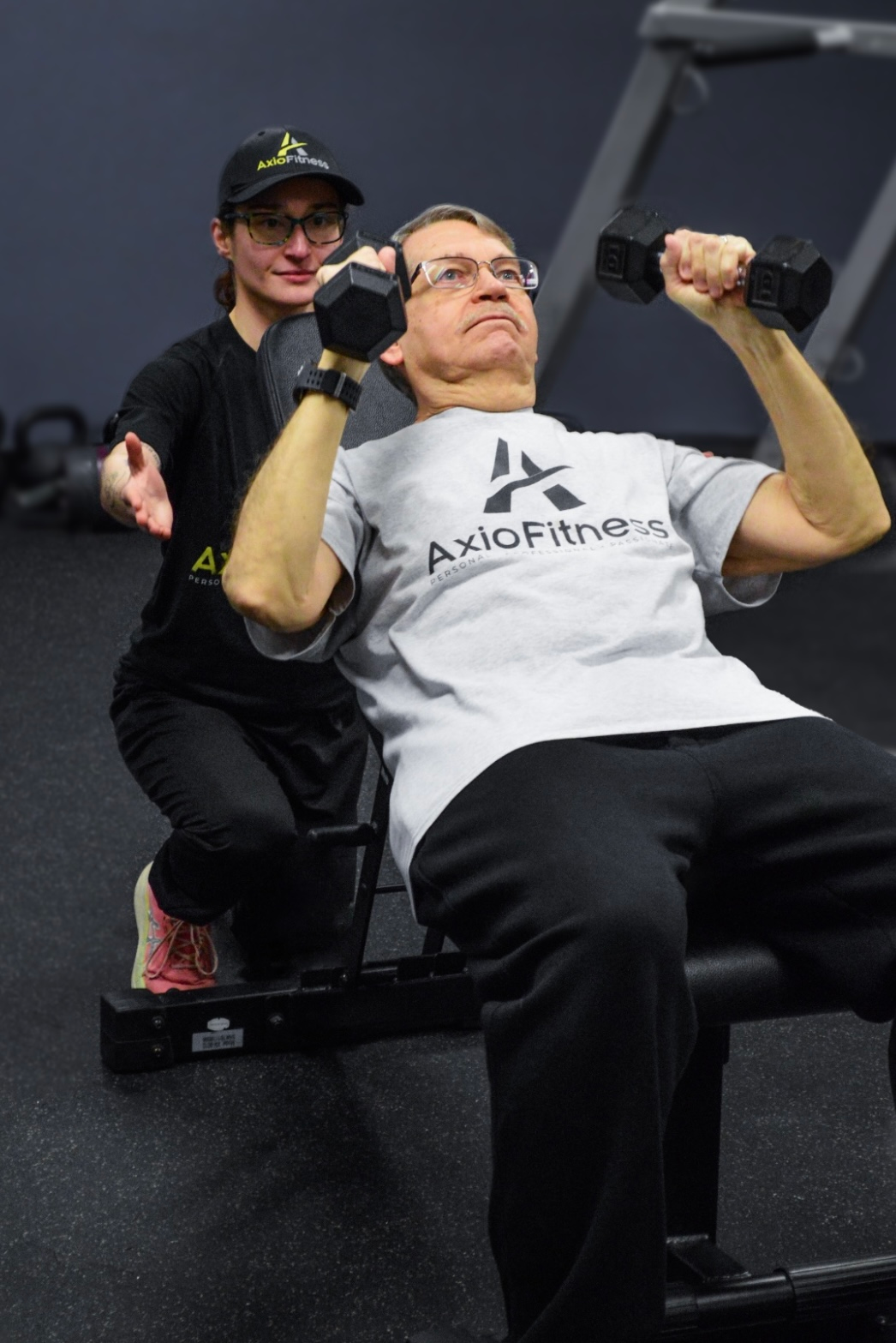
A unilateral exercise is resistance training or weight bearing exercise when you only

work one limb at a time (one arm or one leg). Examples of unilateral exercises for your

lower body include step-ups, split squats, or lunges. Upper-body exercises include 1

arm dumbbell or cable row, and a 1 arm dumbbell or cable press.


Unilateral exercises are great to include in your workout routine because they improve

stabilization and reduce the risk of injury. When you are only working one side at a

time, your body is forced to use the muscles that keep you stable and balanced. This

translates into better balance in everyday life.


These exercises are also great to improve muscle imbalances. We all have a dominant

side or one arm and leg that is stronger than the other. When doing exercises that

involve both sides at once, your dominant side can carry more of the workload without

you realizing it. If it is a squat or bench press, your stronger side can actually be lifting

more than half the weight. Unilateral exercises ensure both your strong and weak side

are getting equal work and help to balance out any differences in strength.


For more understanding of the proper ways to exercise for your health and your goals,

contact Axio Fitness today!


Share Post

Our Recent Blogs
February 3, 2026
We’ve all been there: Monday morning starts with a burst of motivation, but by Thursday, life gets in the way. Suddenly, your fitness goals are pushed to “next week.” If you find yourself stuck in a cycle of starting and stopping, you aren’t lacking willpower—you’re likely lacking accountability. At Axio Fitness, we believe that the greatest value of a personal trainer isn’t just the workout plan; it’s the consistency they bring to your life. Here is why a trainer is a game-changer for your goals: Appointment-Based Success: You are far less likely to skip a workout when someone is waiting for you. That scheduled time becomes a non-negotiable part of your day. Expert Guidance: On days when your energy is low, your trainer adjusts the intensity so you still make progress without burning out. Mental Support: We help you navigate the "plateaus" where most people usually quit. Consistency is what transforms a temporary resolution into a lifelong habit. Let us help you bridge the gap between where you are and where you want to be.
January 26, 2026
The 2025–2030 Dietary Guidelines for Americans, released in early 2026, have reintroduced a classic but controversial visual: the food pyramid. This time, however, it’s inverted, placing a massive emphasis on "real food" and sparking a heated debate among registered dietitians. The Pros: A Return to Real Food Many dietitians celebrate the pyramid’s aggressive stance against ultra-processed foods and added sugars. Emphasis on Satiety: By prioritizing high-quality protein (now recommended at 1.2 to 1.6 kg of body weight) and healthy fats, the guidelines may help people feel fuller and reduce mindless snacking. Gut Health: The new focus on fermented foods and whole produce is a win for the microbiome. The Cons: Science vs. Visuals The primary concern for experts is the "flipped" visual. Confusing Hierarchy: Placing meat, full-fat dairy, and butter at the top—the widest part—suggests they should be the bulk of the diet. Dietitians warn this could lead to excessive saturated fat intake, contradicting the written goal of keeping it under 10% of daily calories. Fiber Famine: Whole grains and legumes have been moved to the narrow bottom, which experts fear will worsen America’s existing fiber deficiency.  The Verdict: While the "eat real food" mantra is a positive step, dietitians advise using the pyramid as a starting point, not a strict rulebook.
January 20, 2026
When the temperature drops, the instinct is often to curl up on the couch. However, stepping out into the crisp, winter air offers unique health benefits that you simply can’t get during a summer stroll. 1. A Natural Mood Booster Winter often brings shorter days and less sunlight, which can lead to Seasonal Affective Disorder (SAD). Exposure to natural daylight—even on cloudy days—helps regulate your circadian rhythm and boosts serotonin, the "feel-good" hormone. 2. Enhanced Calorie Burn Your body works harder to maintain its core temperature in the cold. This process, known as thermogenesis , can slightly increase your metabolic rate, meaning you burn more calories than you would walking in a climate-controlled gym. 3. Sharper Mental Clarity The biting cold acts like a natural wake-up call. It stimulates the nervous system, increases oxygen flow to the brain, and provides a "reset" for mental fatigue. There’s something uniquely meditative about the quiet, muffled sounds of a snowy landscape.  Don’t let the frost keep you inside. Bundle up in layers, grab a warm hat, and embrace the invigorating chill—your body and mind will thank you.
January 5, 2026
Beyond "Good" and "Bad": A Smarter Way to Fuel
More Posts

Leave a Reply

Your email address will not be published.

Required fields are marked *

Save my name, email, and website in this browser for the next time I comment.