October 14, 2026
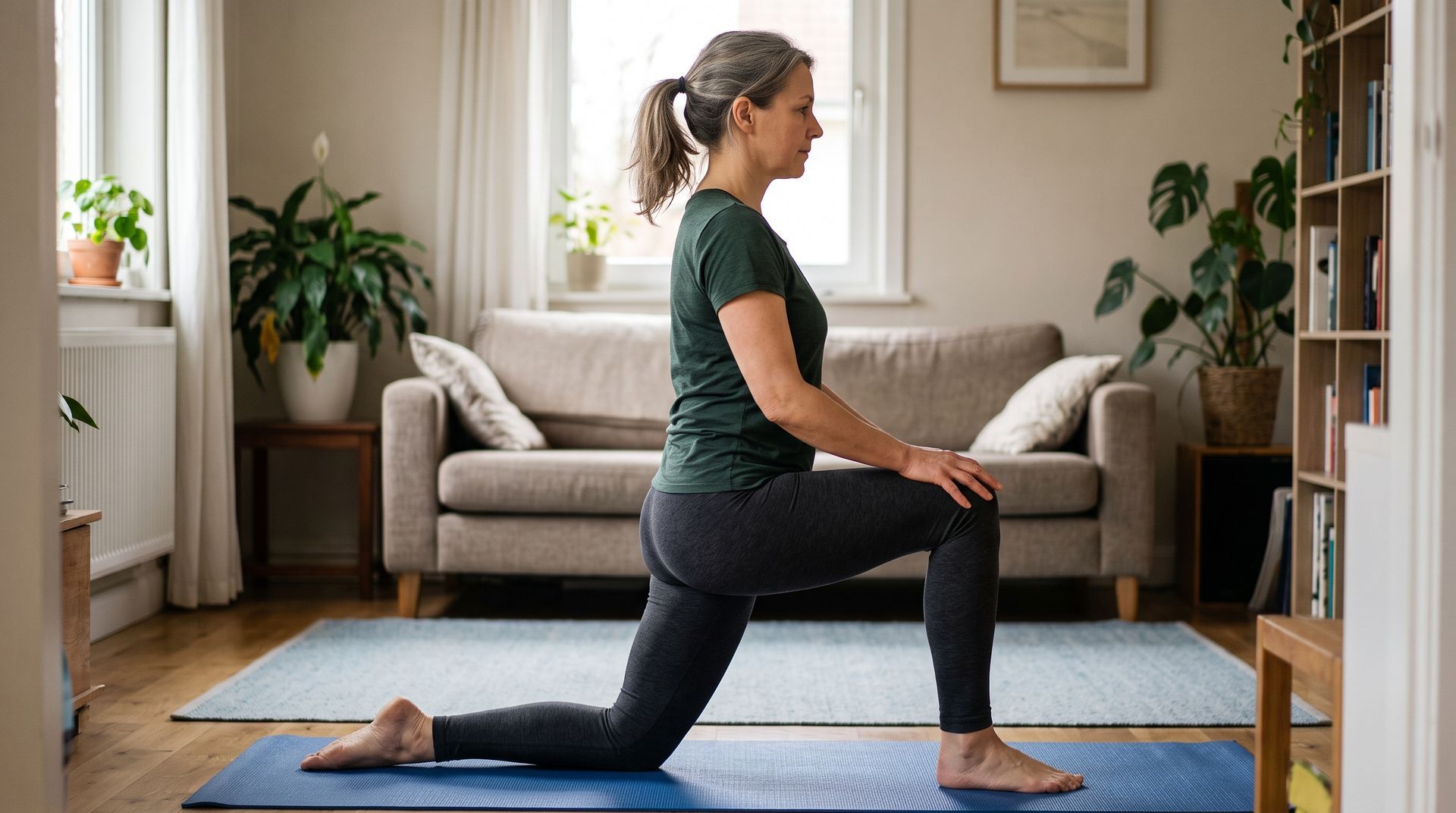
Unlock Your Mobility: 3 Essential Hip Stretches to Melt Away Tension Whether you spend eight hours a day sitting at a desk, logging miles on the road, or pushing hard at the gym, your hips bear the brunt of everyday movement. Tight hips are one of the most common physical complaints, yet they are often overlooked until lower back pain or joint stiffness sets in. Incorporating dedicated hip stretches into your weekly routine is one of the simplest and most effective ways to restore full-body mobility and keep yourself moving pain-free. Why Is Regularly Stretching Your Hips So Important? Your hips form the mechanical center of your body, connecting your upper and lower body. When the muscles surrounding the hip joint—including your hip flexors, glutes, and piriformis—become short and tight, it triggers a chain reaction throughout your entire body: • Relieves and Prevents Lower Back Pain: Tight hip flexors pull your pelvis forward into an anterior pelvic tilt. This overarches the lower spine and puts excess pressure on your lumbar muscles and discs. • Improves Posture and Alignment: Sitting for long periods keeps your hips in a constant state of flexion. Stretching opens up the front of the hips, allowing you to stand taller with less effort. • Boosts Athletic Performance & Range of Motion: Flexible hips allow for deeper squats, longer strides while running, and more powerful lateral movements in sports. • Reduces Injury Risk: When hip mobility is limited, your knees and lower spine are forced to compensate for movements they aren't designed to handle, leading to strain and joint wear. 3 Simple Hip Stretches for Maximum Mobility 1. The Kneeling Hip Flexor Stretch This stretch specifically targets the iliopsoas—the muscle group at the front of your hip that tightens significantly from prolonged sitting. How to do it: 1. Kneel on a soft surface or exercise mat. Step your right foot forward so your right knee is bent at a 90-degree angle directly over your ankle. Your left knee remains resting on the floor. 2. Keep your torso tall, engage your core, and lightly tuck your pelvis under (avoid arching your back). 3. Gently shift your weight forward into your right hip until you feel a deep stretch along the front of your left hip and thigh. 4. Hold for 30 to 45 seconds , breathing deeply. Repeat on the opposite side. 2. The Figure-4 Stretch (Reclined Pigeon) An accessible alternative to traditional pigeon pose, the Figure-4 stretch targets the glutes, deep hip rotators, and the piriformis muscle, helping relieve sciatic nerve pressure. How to do it: 1. Lie flat on your back with your knees bent and feet flat on the floor, about hip-width apart. 2. Cross your right ankle over your left knee, creating a shape that resembles the number 4. Flex your right foot to protect your knee joint. 3. Thread your hands around the back of your left thigh and gently pull your left knee toward your chest until you feel a comfortable stretch in your right outer hip and glute. 4. Keep your head and shoulders relaxed flat on the floor. Hold for 45 to 60 seconds , then switch sides. 3. The Half Pigeon Pose Pigeon Pose is a staple in yoga for good reason: it delivers an intense, deep-tissue stretch to both the hip rotators on the lead leg and the hip flexors on the back leg. How to do it: 1. Start on all fours (or in a downward dog position). Bring your right knee forward and place it behind your right wrist, angling your right shin diagonally toward your left hip. 2. Extend your left leg straight back behind you, with the top of your left foot flat on the floor and your hips squared to the front. 3. Keep your spine upright to feel a deep stretch. For a deeper release, walk your hands forward and lower your chest toward the floor over your front shin 4. Rest your forearms or forehead on the mat and hold for 45 to 60 seconds . Slowly push back up and switch legs. Tips for Safe Stretching • Warm Up First: Never stretch cold muscles. Do 5 minutes of light movement (like walking or gentle bodyweight squats) before stretching. • Breathe, Don't Bounce: Inhale deeply through your nose and exhale as you settle into the stretch. Avoid bouncing movements, which can cause muscle micro-tears. • Listen to Your Body: You should feel a mild, comfortable pull—never sharp or stabbing pain. If you experience joint discomfort, reduce the depth of the stretch. Consistency is key! Spending just 5 to 10 minutes performing these stretches daily will help keep your hips mobile, your spine supported, and your body feeling its best.